


£30.00
Cagrilintide – Research Overview
Cagrilintide is a long-acting amylin analog studied in experimental research for its interaction with appetite-related neuroendocrine signaling and metabolic regulation pathways. Laboratory studies frequently examine its role in satiety signaling, peptide hormone receptor pharmacology, and central energy-balance mechanisms.
Cagrilintide (NNC0174-0833 / AM833) is a synthetic 37-amino-acid peptide derived from human amylin (islet amyloid polypeptide, IAPP). It has been engineered as a long-acting analog designed to interact with amylin receptors (AMYR) and calcitonin receptors (CTR), forming part of a class sometimes referred to as dual amylin receptor/calcitonin receptor agonists (DACRAs).
Molecular Mechanism Research
Amylin and Calcitonin Receptor Interaction
Amylin receptors consist of a calcitonin receptor core complexed with receptor activity-modifying proteins (RAMPs). Cagrilintide has been shown in experimental models to activate these receptor complexes, producing intracellular signaling events associated with satiety-related neuroendocrine pathways.
These receptor systems are highly expressed in several regions involved in metabolic signaling, including:
the area postrema
the nucleus tractus solitarius (NTS)
hypothalamic nuclei associated with energy regulation
Activation of these receptors has been associated in experimental models with modulation of neural circuits involved in satiety signaling and nutrient-responsive feedback pathways.
Central Neuroendocrine Signaling
In preclinical research, cagrilintide has been examined for its influence on central nervous system signaling pathways that regulate energy balance.
Experimental observations suggest receptor activation within brainstem and hypothalamic regions may influence:
satiety-related neuronal signaling
hypothalamic appetite regulation pathways
reward-related food signaling circuits
These neuroendocrine pathways are often studied in research investigating peptide hormone signaling involved in energy homeostasis.
Peripheral Signaling Pathways
Beyond central receptor activity, experimental studies have also reported additional signaling events associated with cagrilintide activity.
These include:
cAMP signaling pathways
phosphorylation events involving cellular ion transport proteins
signaling interactions observed in renal epithelial transport models
Such observations are typically explored in preclinical studies examining peptide hormone signaling and metabolic regulatory pathways.
Structural Characteristics
Cagrilintide is a 37-amino-acid peptide analog derived from the endogenous amylin sequence. Structural modifications have been introduced to improve molecular stability and prolong receptor engagement in experimental models.
These modifications differentiate cagrilintide from earlier amylin analogs, which have also been used in research examining amylin receptor signaling.
Product description:
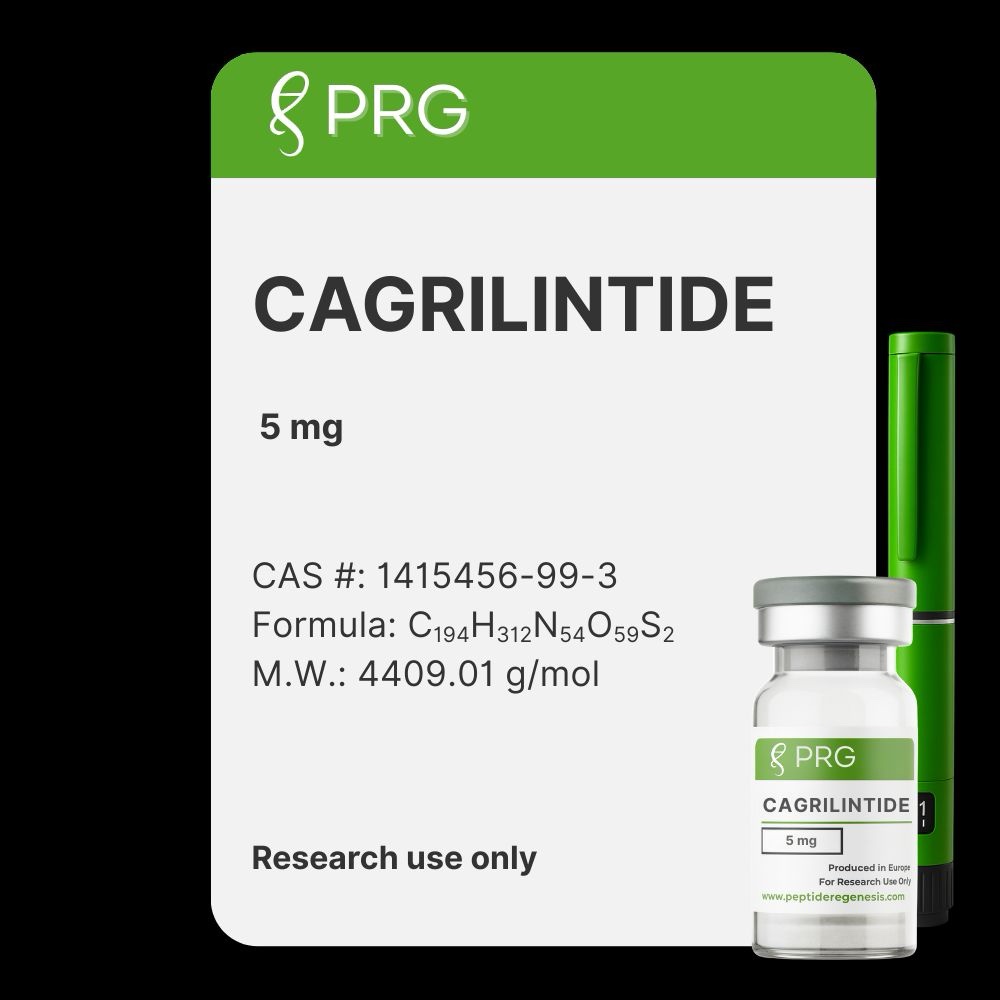
Molecular Formula: C194H312N54O59S2
Molecular Weight: 4409 g/mol
CAS: 1415456-99-3
Total Active Ingredient: 5 mg per vial – ( Vial format: lyophilized powder for enhanced stability.)
1 review for Cagrilintide 5mg Research Peptide
Add a review
Related products







Meroline –
Happy with the service, peptide received. Will share Pharm Select UK